Fashion is no longer a game of “all or nothing.” In the modern American landscape, the most stylish women aren’t those wearing head-to-toe designer labels; they are the ones who can pair a $15 vintage tee with a $3,000 Chanel blazer and make it look like a curated masterpiece. As a designer, I have seen the industry shift from exclusionary luxury to a more democratic, creative expression known as “High-Low styling.”
This approach is about more than just saving money—it is about developing a unique visual language. When you mix price points, you remove the “catalog” look from your wardrobe and replace it with personality. It allows you to experiment with trends through fast fashion while anchoring your look with investment pieces that provide structure and longevity. In this guide, we will explore the nuances of this art form to help you look like a million bucks on a realistic budget.
Click to view the High-Low Wardrobe Philosophy
High-low styling is a sustainable and intentional way to build a closet. According to elsabstyling.com, it allows for a “versatile wardrobe” that feels practical yet polished. By focusing your budget on “anchor” pieces, you ensure that even your most affordable items look more expensive by association.
The Psychology of the “High-Low” Mix in American Fashion
In the US, fashion is deeply tied to the concept of “effortless chic.” Whether you’re walking through the streets of SoHo or grabbing coffee in West Hollywood, the goal is to look like you didn’t try too hard. A full designer look can often feel stiff or “try-hard.” By introducing a “low” element—like a pair of worn-in Levi’s or a basic Hanes tank—you inject a sense of relatability and “cool” into the outfit.
The high-end pieces provide the architecture of the outfit—the shape, the fabric quality, and the status. The low-end pieces provide the vibe—the trendiness, the comfort, and the approachability. Mastering this balance is the secret (P.L.A.N.) used by top stylists to ensure their clients look authentic rather than like walking advertisements for a single brand.
“Style is not dictated by price tags, but by how clothing is curated and worn.” — meggallagher.com
Where to Invest vs. Where to Save
One of the biggest mistakes people make when building a high-low wardrobe is spending their “high” budget on the wrong items. You want to invest in pieces that have a high “Cost Per Wear” (CPW). These are the items that will last for a decade, not a season.
The Investment (High) List
- Leather Goods: Handbags, boots, and belts. Quality leather ages beautifully.
- Tailoring: A designer blazer or a perfectly cut trench coat.
- Fine Jewelry: Pieces you never take off, like a Cartier Love bracelet or a classic timepiece.
- Outerwear: A heavy wool coat or a high-end leather jacket.
The Budget (Low) List
- Trend-Driven Silhouettes: If a specific “viral” pant shape is in style, buy the Zara version.
- Basic Tees and Tanks: Brands like Uniqlo or Target offer excellent cotton basics.
- Summer Dresses: Lightweight linen or cotton blends that you’ll only wear for three months.
- Costume Jewelry: Statement earrings or trendy chains from places like wholesale jewelry websites.
| Category | The “High” Choice (Invest) | The “Low” Choice (Save) | Resulting Vibe |
|---|---|---|---|
| Streetwear | Balenciaga Sneakers | H&M Oversized Hoodie | Luxury Urbanite |
| Professional | Theory Trousers | Target Graphic Tee | Creative Executive |
| Evening | Saint Laurent Heels | Zara Slip Dress | Red Carpet Minimalist |
| Winter | Burberry Trench | Amazon Puffer Vest | Seasonal Pro |
Pro-Tip: The Power of the Tailor
Pro-Tip: Never underestimate a $20 trip to the tailor. You can buy a “low” fashion blazer from Mango or H&M, and if you have a tailor nip in the waist or shorten the sleeves to your exact proportions, it will instantly look like a $500 piece. Fit is the ultimate equalizer in fashion.
How to Create the Perfect High-Low Formula
To make this work, you need a strategy. You can’t just throw random things together and hope for the best. As mentioned in the angelahowenstein.com playbook, you should follow a formula that balances color, texture, and “hero” pieces.
1. The “One Hero” Rule
When starting out, choose exactly one luxury item to be the star of the show. Let’s say it’s a Gucci belt. Pair it with affordable straight-leg jeans and a crisp white button-down. The belt acts as the focal point, drawing the eye and signaling “quality,” which makes the observer assume the rest of the outfit is of similar caliber.
2. Texture Play as the Equalizer
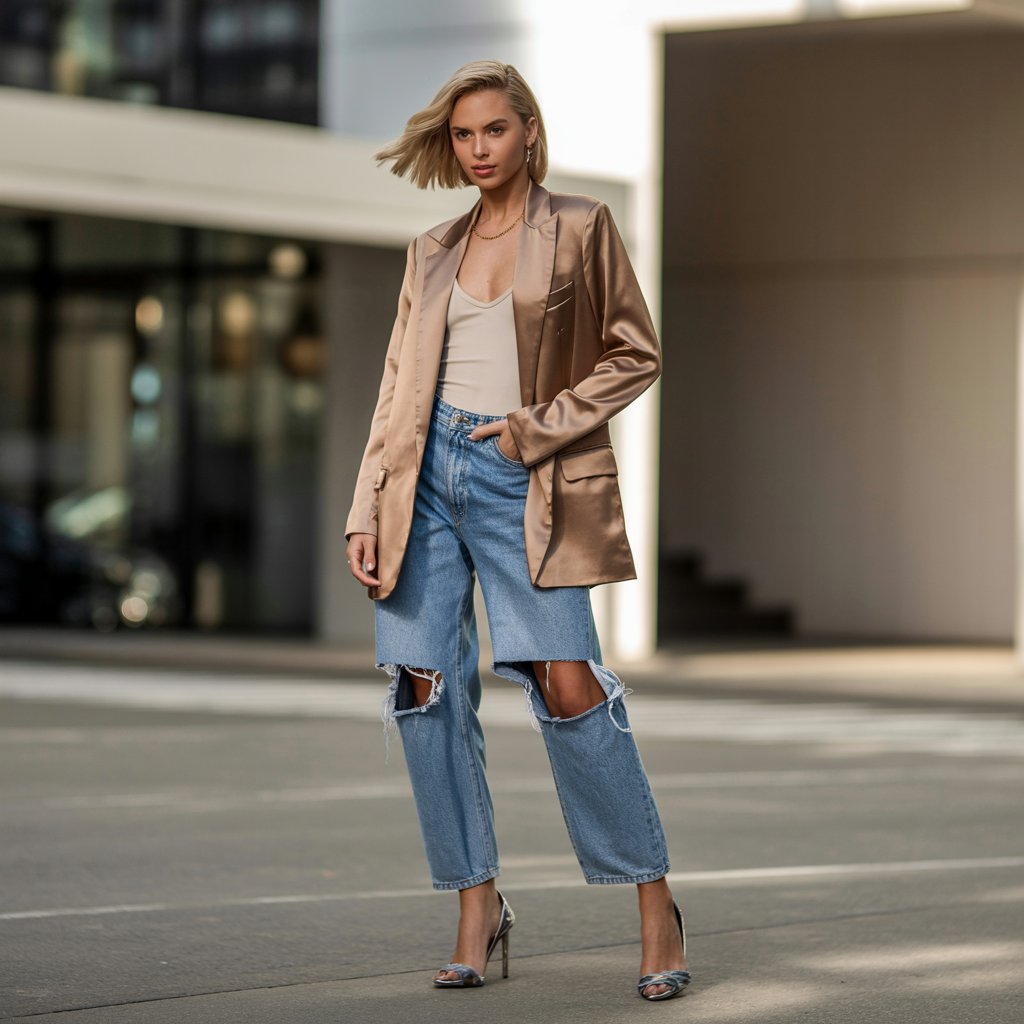
Mixing high and low is easier when you play with textures. Silk and denim is a classic US fashion staple. A high-end silk blouse paired with vintage, “low” denim creates a beautiful contrast. The shine of the silk elevates the ruggedness of the denim, while the denim keeps the silk from looking too formal for a lunch date.
3. Color Cohesion
Monochrome is your best friend. When you wear a single color—like an all-cream outfit—the price tags disappear. A pair of $40 cream trousers from Uniqlo looks remarkably similar to a $600 pair from The Row when styled with a luxury cashmere sweater in the same shade. Color harmony tricks the eye into seeing luxury.
Sustainable Fashion through High-Low Styling
High-low styling is inherently more sustainable than fast-fashion-only shopping. By investing in “forever pieces,” you reduce the frequency of your shopping. You are building a foundation of quality. As noted by meggallagher.com, this “slow fashion” approach extends the life cycle of your garments and encourages mindful consumption.
Instead of buying five cheap coats that fall apart after one winter, you buy one high-quality wool coat. You then supplement that coat with affordable scarves, hats, and gloves to change the look each year. This is the “smart-save” mentality that defines the modern American fashionista.
Avoiding Common High-Low Mistakes
While the high-low mix is versatile, there are a few pitfalls to watch out for:
- Over-branding: Avoid wearing three different designer logos at once. It looks cluttered and takes away from the “effortless” goal.
- Ignoring Fabric Quality: Even “low” pieces should have decent fabric. Avoid 100% polyester that has a plastic-like shine; it will make your luxury bag look fake by association.
- Visible Wear and Tear: Your affordable pieces must be pristine. Use a fabric shaver on cheap sweaters and keep your low-cost shoes polished.
Semantic Keywords to Guide Your Wardrobe
- Investment Pieces: The “high” items like leather bags and tailored blazers.
- Fast Fashion: The “low” items that tackle seasonal trends.
- Capsule Wardrobe: The foundation of basics that makes mixing easy.
- Affordable Luxury: The sweet spot where design meets reasonable pricing.
- Cost-Per-Wear (CPW): The formula ($$ / times worn) to justify a splurge.
Conclusion: Confidence is the Final Layer
At the end of the day, the most important “piece” of your outfit is your confidence. As the saying goes, “Confidence costs $0.” Whether you are wearing a thrifted jacket or a Dior gown, if you carry yourself with poise, the world will buy the look.
The art of mixing high and low fashion is about liberation. It’s about realizing that you don’t need to be a millionaire to have style—you just need to be a strategist. Start with one great bag, find a tailor you trust, and never be afraid to pair your “Lavish” with your “Lay-up.”
For more tips on masterfully curated wardrobes, check out the Who What Wear UK guide for 2026 outfit formulas.